
Our Location
1130 Upper Hembree Rd , Roswell, GA 30076
Hyperbaric oxygen therapy has a real evidence base for a specific set of conditions, and a marketing problem everywhere else. Both things are true at once, and telling them apart is most of what this article is for.
What Hyperbaric Oxygen Therapy Actually Does
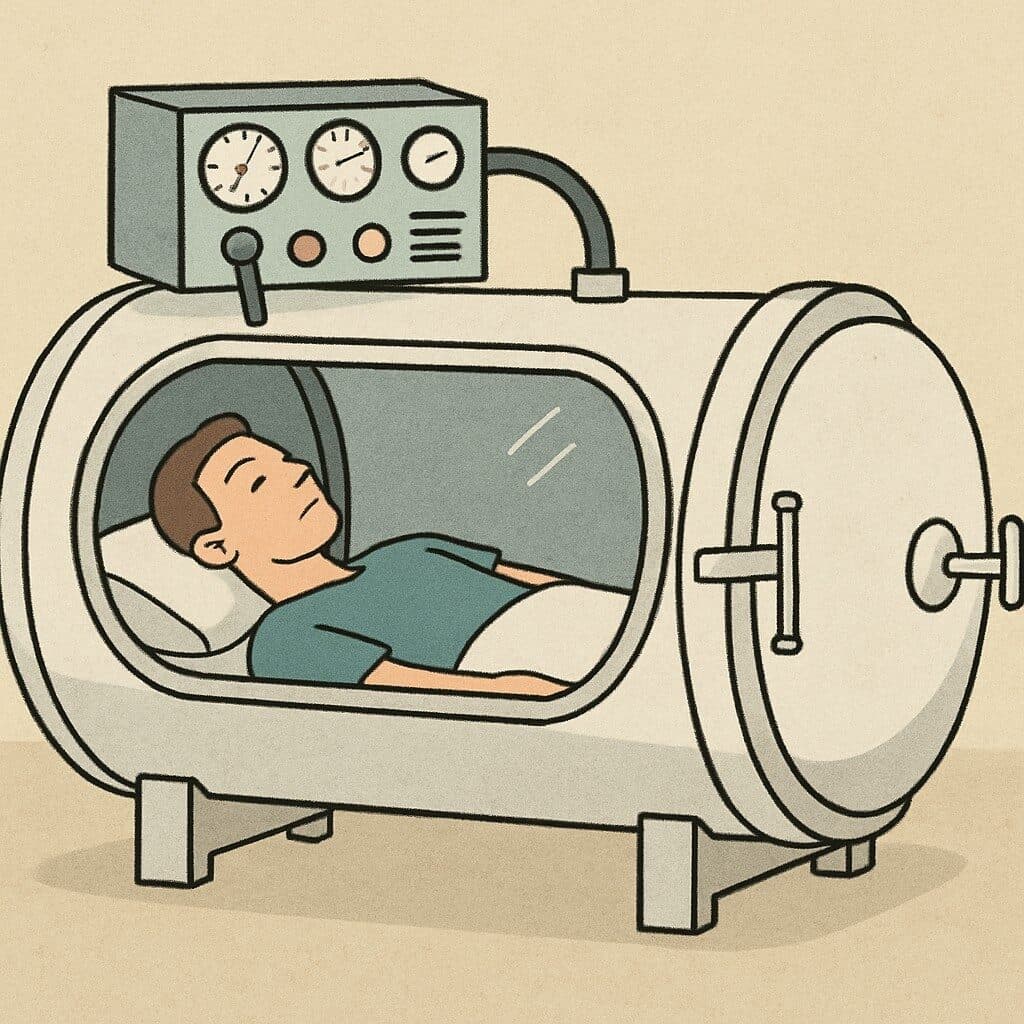
You breathe oxygen inside a chamber pressurised above normal atmospheric pressure. Under that pressure, far more oxygen dissolves directly into the plasma, the liquid part of your blood, rather than riding on haemoglobin the way it normally does. Dissolved oxygen reaches places red blood cells struggle to get to, including tissue where circulation has been damaged.
That mechanism is not controversial. It is why the therapy works for the conditions it is cleared for. The question is always whether the condition in front of you is one where more dissolved oxygen changes the outcome.
The Distinction Most Articles Skip
Not all hyperbaric chambers are the same, and the difference matters more than almost anything else you will read about HBOT.
Hard-shell clinical chambers run at roughly 2 to 3 times atmospheric pressure (2 to 3 ATA) and deliver near-100 percent oxygen. This is what hospital hyperbaric units use, and it is what nearly all of the clinical research was done on.
Soft-shell or "mild" chambers typically run at around 1.3 ATA. They are the ones you find in wellness settings and for home use. In the United States they are cleared for one indication: acute mountain sickness. Research conducted at 2.4 ATA does not automatically transfer to 1.3 ATA, and any article that quotes hospital research while describing a mild chamber is blurring two different things.
If you are considering HBOT anywhere, ask what pressure the chamber runs at and what it is cleared for. A provider who cannot answer that plainly is a provider to be careful with. Our hyperbaric oxygen therapy page covers what we offer, and we will tell you directly whether it fits what you are dealing with.
What HBOT Is Cleared For
The FDA has cleared hyperbaric oxygen therapy for a defined list of conditions. The main ones:
- Decompression sickness, the diving injury the therapy was built for
- Carbon monoxide poisoning
- Air or gas embolism
- Gas gangrene and certain necrotising soft tissue infections
- Crush injury and acute traumatic ischaemia
- Non-healing wounds, particularly diabetic foot ulcers that have not responded to standard care
- Delayed radiation injury, meaning tissue damage left behind by radiotherapy
- Compromised skin grafts and flaps
- Refractory osteomyelitis, a bone infection that will not clear
- Severe anaemia where transfusion is not possible
- Sudden sensorineural hearing loss
- Thermal burns
- Intracranial abscess
Notice what these have in common. Almost all of them are situations where tissue is short of oxygen for a mechanical reason, or where a gas needs clearing from the body. That is the shape of a condition HBOT helps.
What It Is Not Cleared For, and Why That Matters
The FDA has issued consumer warnings about centres promoting hyperbaric oxygen for uses it has not cleared. The list it names includes cancer, Alzheimer's disease, autism, Lyme disease, multiple sclerosis, Parkinson's disease, diabetes, cerebral palsy, sports injury recovery and anti-aging .
That is not a statement that research into these has stopped. Some of it is ongoing and some of it is interesting. It is a statement that the evidence does not currently support selling the therapy for them, and that a clinic presenting it otherwise is telling you something the regulator disagrees with.
One distinction worth holding onto, because it gets misused constantly: HBOT has an established role in delayed radiation injury , which is repairing tissue damaged by radiotherapy. That is not the same as treating cancer, and it is not the same as making chemotherapy or radiotherapy work better. If you see the first fact used to imply the second, you are reading marketing.
What a Session Involves
You lie or sit in the chamber for somewhere between 60 and 120 minutes depending on the protocol. Pressure comes up gradually. Most people feel their ears needing to equalise on the way, much like a descending aircraft, and you will be shown how to clear them. After that it is uneventful. People read, listen to something, or sleep.
Courses for cleared indications typically run to a substantial number of sessions rather than one or two. Wound protocols often run 20 to 40. Anyone offering a single session as a fix for a chronic problem is not describing how the therapy is used clinically.
Risks and Who Should Not Have It
HBOT is well tolerated by most people, which is not the same as risk-free.
- Ear and sinus barotrauma is the most common problem by a wide margin. Usually mild, occasionally not.
- Temporary short-sightedness. Vision can shift over a course of treatment and usually returns to baseline over weeks to months afterwards. Do not buy new glasses mid-course.
- Oxygen toxicity seizure. Rare, and more likely at higher pressures and longer exposures.
- Fire risk. An oxygen-rich pressurised environment is exactly the wrong place for a spark, which is why chambers have strict rules about what goes in with you. Follow them exactly.
An untreated collapsed lung (pneumothorax) is an absolute contraindication. Tell anyone assessing you if that is a possibility. Certain chemotherapy drugs, particularly bleomycin, matter too. So do recent ear surgery, uncontrolled fever, seizure disorders, severe claustrophobia and some lung conditions. Pregnancy needs individual assessment.
None of that is a reason to dismiss the therapy. It is a reason to be assessed by someone who takes a full history first rather than booking you in.
How to Judge a Provider
Four questions worth asking anywhere, including here:
- What pressure does the chamber run at, and what is it cleared for?
- Is my condition one of the cleared indications, or would this be off-label?
- What does the evidence actually show for my situation, and what does it not show?
- Who reviews my history before I go in?
A provider who answers the second question honestly, including when the answer is "no, and here is why", is worth more than one who says yes to everything.
Where We Stand
We offer hyperbaric oxygen therapy as part of a wider plan, not as a standalone answer, and we would rather tell you it is not appropriate than take a booking. If you have a cleared indication, the right route is usually a hospital hyperbaric unit, and we will say so. Dr. Gail Ravello reviews your history first either way.
To talk it through, call (770) 674-6311 or contact us . Our hyperbaric oxygen therapy page has the practical detail, and natural pain management and disease prevention cover the approaches this tends to sit alongside.
This article is general information, not medical advice. Hyperbaric oxygen therapy does not diagnose, treat or cure any condition it has not been cleared for, and nothing here replaces the care of your own doctor.
Ready to heal naturally?
Start your personalized naturopathic, functional & holistic care plan in Roswell, GA, proudly serving Alpharetta, Atlanta & the greater Fulton County area.
Search
Categories
- Adrenal Health 1
- Benefits of Detoxification 2
- Brain Health 2
- Breast Cancer 1
- Cardiovascular Disease 1
- Colonic Hydrotherapy 5
- Conditions 10
- Corrective Massage Therapy 1
- Diarrhea 1
- Gut Health 6
- Heavy Metal Detox 1
- Hormonal Imbalance 1
- Hyperbaric Oxygen Therapy 2
- Immune Health 1
- Lifestyle 8
- Nutrition and Health 12
- Treatments 12
- Health and Wellness 12
- Weight Management 2
- Whole Body Health 11
- Soft-Shell Hyperbaric Chamber 1
Recent Posts
- Adrenal Fatigue: Symptoms and Solutions April 2026
- Benefits of Colon Hydrotherapy April 2026
- Benefits of Hyperbaric Chamber Oxygen Therapy April 2026
- Beyond the Bulb Syringe: Why Colon Hydrotherapy Offers a More Thorough Cleanse April 2026
- Brain’s Role in Mental Health April 2026
- Colon Hydrotherapy in the Atlanta Metro Area April 2026
Tags